
Your Kid's Math Mistakes Are Doing More Than You Think
That frustrated erasing? It's not failure. It's your child's brain building a better path to the answer.
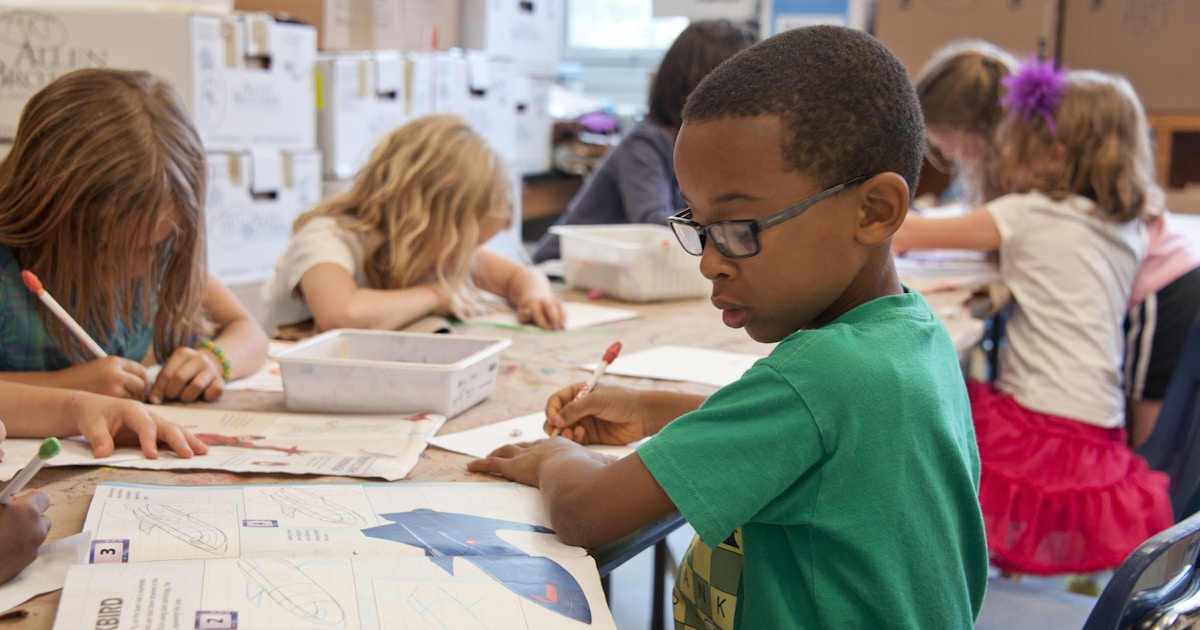
Your seven-year-old is hunched over a worksheet. She writes an answer, stares at it, erases it so hard the paper wrinkles. Writes again. Erases again. You're watching from the kitchen, wondering if you should step in.
Don't. Not yet. What looks like struggle is actually the most productive thing her brain can do right now.
The erase mark is where learning lives
Recent brain research from Stanford has identified something parents rarely hear about: when a child makes a math error and catches it themselves, a specific region of their brain lights up. Scientists call it performance monitoring, the moment the brain notices "wait, that doesn't seem right" and starts searching for a better path.
This is not the same as being told the answer is wrong. When a child discovers the mistake on their own, the brain does double work: it processes the error and builds a new strategy simultaneously. When someone else points out the mistake, only half of that process fires.
Every time your child erases and tries again, they're doing exactly what their brain needs to grow. The frustration you're watching? That's cognition under construction.
"Getting it right" is not the same as understanding it
There's a subtle trap parents fall into, especially with math. We see a correct answer and feel relief. We see a wrong one and feel concern. But a child who gets the right answer by memorizing a procedure and a child who gets the wrong answer while genuinely reasoning through the problem are in very different places. The second child may actually be closer to real understanding.
Think about it this way: if your child can recite that 7 × 8 = 56 but can't explain why, they have a fact. If your child draws out groups of objects and counts wrong but understands they're looking for "7 groups of 8," they have a concept. Facts without concepts crumble under pressure. Concepts eventually produce facts that stick.
This is what learning researchers mean when they talk about "productive struggle." The difficulty isn't a sign that something is going wrong. It's the mechanism by which math understanding actually forms.

*Photo: *Unsplash
What to do when your child gets it wrong
The instinct is to correct. "No, sweetie, it's 56, not 54." Quick, clean, problem solved. But that instinct shortcuts the exact brain process that builds lasting understanding.
Try this instead:
Pause. Give your child 10-15 seconds of silence after they write an answer. Often, they'll catch it themselves. That self-correction is worth ten times more than your correction.
Ask, don't tell. "Can you walk me through how you got that?" is more powerful than "That's not right." When kids explain their thinking out loud, they frequently spot their own errors mid-sentence.
Celebrate the rethink. "You changed your answer — what made you realize?" That question teaches your child that noticing an error is a skill, not a failure.
Reframe mistakes at dinner. Share your own. "I measured the recipe wrong today and used too much salt." Mistakes lose their sting when they're normal family conversation, not something reserved for math worksheets.
The best math learning environments share one trait: they let kids be wrong without penalty, giving the brain room to do its quiet, essential work. It's why Wondika's story adventures never punish a wrong answer. The story just gives your child another way in, another chance to reason through it. But you don't need an app for this. A kitchen table works too.
Tonight, if your child gets stuck on a math problem, try sitting next to them without saying a word. Just be there. Let them erase. Let them try again. The answer they land on might be right, might be wrong. Either way, their brain just got stronger.